Tuesday, June 24, 2014

Vast beyond all measure


Normally I find writing in my blog about the experiences here therapeutic.  This time, though, my hands nearly shake as I try to put words to what happened at Kudjip last week.

On Thursday morning Levi woke up with a bit of a runny nose and wheezing.  He did this a couple times before we left the States, needing a visit to urgent cares and some nebulized medicines to calm him down.  I gave him a treatment but worried more later that morning when Esther asked me to bring my pulse oximeter (used to measure oxygen levels in the blood) home from work at lunch.

When I got home he wasn't doing too badly, but Dr Erin came to check on him as well.  I went back to work believing that his medicines would enable him to turn the corner.

After work, Levi looked drained, sitting alone on the couch watching a cartoon on the laptop while getting his medicine.  He could only speak in one-word answers to my questions so I called Erin again.  She recommended IV fluid to get him some energy since he was breathing so fast.  The next ten hours were probably the longest and scariest of my life.


Getting oxygen and IV medicines at the hospital

We got our fluids in the ER and planned to return home.  But I noticed Levi having more difficulty and had to give him breathing medicine every hour or so.  His heart rate hovering at 180 and his breathing labored and coming about 60-70 times per minute, I needed this illness to be managed by someone else.  Erin graciously came back to check on him.  Her level of concern told me that this was getting serious.

She brought Esther, Levi and I back to the hospital while our neighbors took care of Anna and Lucy.  When we got to Levi's hospital room, our field coordinators were there and so was our Anesthesia officer with pediatric intubation (breathing tube) supplies.  Levi was getting continuous nebulized medicines, oxygen, IV aminophylline and a dose of IV magnesium but still breathing about 80 times per minute, struggling to get enough air and wheezing so loudly you could hear each one of his labored breaths from across the room.  Erin got information about having him evacuated to Australia.

Would we actually need these for a breathing tube?

Esther needed to go home to take care of our girls, so I held Levi to keep him calm while he received drugs to keep his airways open.  I couldn't believe what was happening, but I felt the effects of dozens if not hundreds of people praying for us.  I also saw that Erin had no intentions of going anywhere - she stayed awake at his bedside all night, adjusting IV drip rates, giving nebulized treatments and praying at his bedside.  (Levi noticed this at one point and said, "wake up!" which made us both smile - partially out of relief to hear his voice)

About six hours later, in the early morning, Levi took an interest in Erin's iPad, and began playing a game on it.  I believe the pediatricians might make an exception on the idea of limiting computer and movie exposure in kids if such devices calm them down enough to keep them breathing.

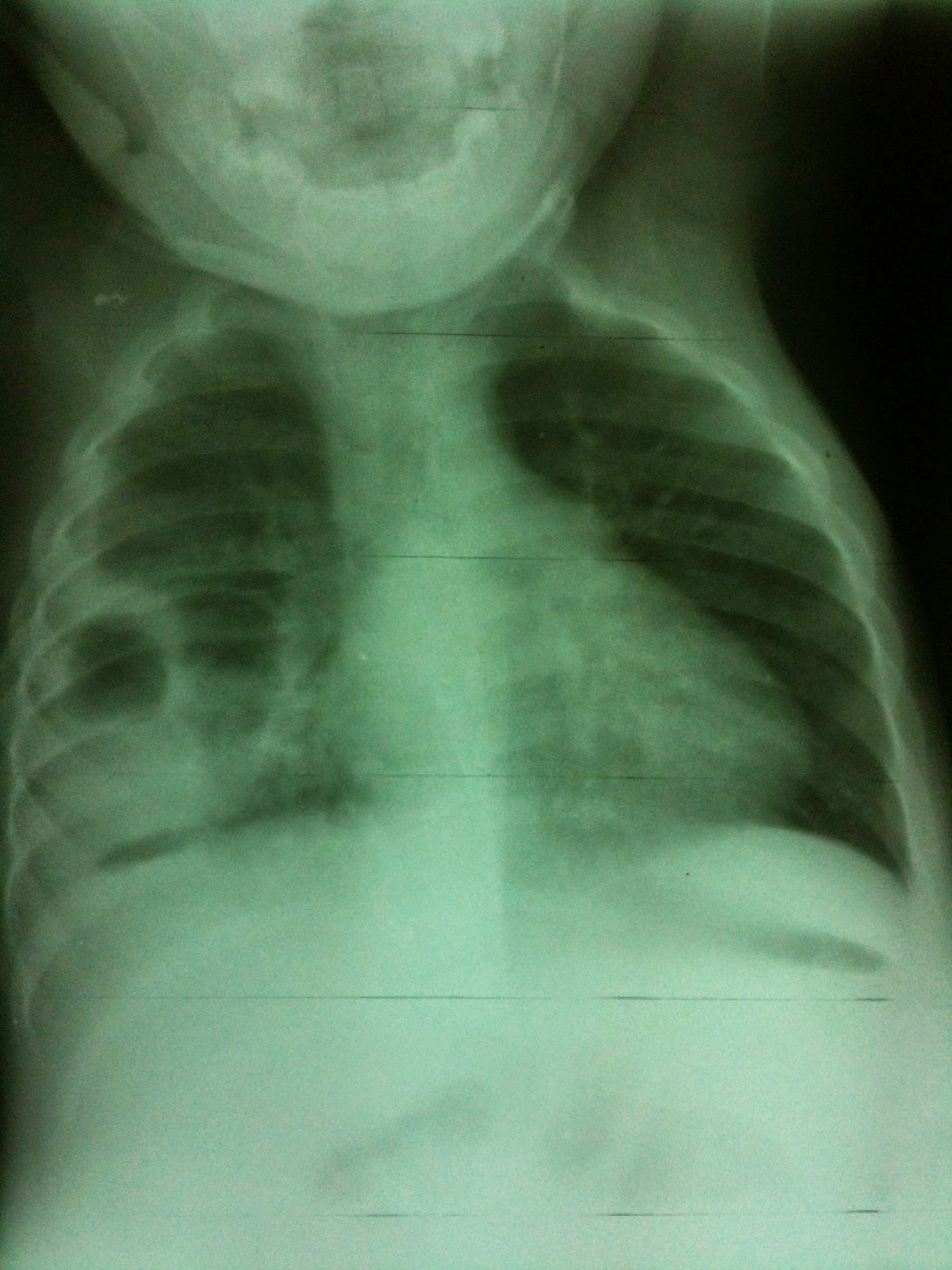
From that point on, he showed gradual improvement.  We spaced out his breathing medicines to every hour, gave him additional oral medicine and took a chest Xray which showed pneumonia.  I was able to take the oxygen away and Esther showed up with some breakfast and to give me a break.

As he got better, we transitioned him back to the house to receive the rest of his IV medications but kept him on breathing treatments every two hours.


Trying it out at home

Just 72 hours after this ordeal, you would barely know that he was sick.  He's back to running, playing with Anna, talking excitedly but also to being a bit moody (from loss of sleep and steroids, I hope)

Was this kid sick?

One of our family members back home admitted the day after we left the hospital that their first reaction to hearing about his illness was "You get all three of those babies on a plane and back here now!"  In my heart, I confess I too knew that thought and felt the anxiety leading up to it.

Now Levi is on a host of medications to prevent flare ups of his condition.  They're not easy to get here.  There's also no guarantee that he won't have another episode like this one, or that it might even get worse.  How do I approach that knowledge?  I asked Bill via email if it made me a bad missionary that I was considering the wisdom of living somewhere without the advanced medical care he could potentially need.

I blogged in the past about the concept of following God's call even when circumstances or outcomes might be challenging for me.  Now I face that idea in a new light.  That night in the hospital with Levi shook everything I felt to be secure around me.  Does that change where I live - who I serve - how I see patients - my calling?

"The heavens and the earth will shake; but the Lord will be a shelter for His people."
-Joel 3:16

We've not felt compelled to change our plans for staying here.  Esther and I are both prayerfully considering these next weeks and months while seeing how Levi does.

I remember a couple years ago speaking with a friend about the incredible love a father has for their children.  Obviously, there are Biblical parallels to this concept.  That Christ would give up his own life to make things right for his children (us) resonates easily with me.  I would give my life in a heartbeat for my children.  But another amazing love is that God would give His son for us.  I find it harder to as readily say I would give one of my children's lives for others.  I don't know what that means yet.  But I do know that I can very slightly understand the great pain that God the Father must have felt as He saw His child suffering.  And I pray that I'll use that as motivation to continue to share His love with those brought under my care here.


How deep the father's love for us
How vast beyond all measure
That He would give His only son
To make a wretch His treasure

Saturday, June 7, 2014

Weekend

On Sunday the 19th of May, one of the politicians in this country threw a great party.  His son graduated from high school and the entire family came to see him and celebrate.  Unfortunately, someone who shouldn't have been driving got behind the wheel and their bus "capsized" (Tok Pijin for rolled over) on the road near a bridge, killing three people at the scene and seriously wounding ten others.  Two subsequently died in the emergency room while I tended to them.  Others had various injuries and, after getting stabilized, stayed in the hospital.  One of them was Gibson.  I wrote about this accident in my last blog post. 

Gibson fell through the car as the vehicle rolled over and caught all of his weight on his right leg, dislocating his hip.  Equipment or another passenger fell onto his left leg causing a fracture of his left knee and a large collection of blood to build up in the joint, called hemarthrosis. 

I reduced Gibson's dislocation and discovered his knee fracture the following day, which had to be drained through a needle placed into his joint.  Gibson stayed in the hospital about two weeks while his hip remained in traction and we worked a cast around his fractured knee.

I thought Gibson was depressed, and with good reason.  He faced a long period of debility and lost some of his family members in the accident.  But when I told Gibson he could go home, he and his family members accepted my prayers and I saw his first smile in weeks.


Gibson happy to go home alive

We are currently in the middle of a measles epidemic in our area of Papua New Guinea and half my medical ward was confiscated for additional pediatric cases.  

Measles is vanishingly rare in the states, like tetanus, thanks to nearly universal immunization practices.  But in Papua New Guinea children less than five are coming in nearly every hour with high fevers, cough and rashes from this virus.  Measles itself only causes half the battle, it also results in pneumonias and, in several of our patients, seizures.  There is no medicine for Measles.  Children who can't breathe get oxygen, children who can't eat or drink get IV fluids, children who seize get valium and they all get prayers (and vitamin A).

I've tried to stay away from the serial postings on Facebook about immunizations.  But working in Papua New Guinea I must say I am VERY grateful that nearly all children are immunized against these diseases in the US.  Immunizations are extremely effective, extremely safe and save the lives of the smallest and most vulnerable patients.  Please give your children their immunizations.

We've had a relaxing weekend so far.  Saturday Levi and I worked on a project I've been trying to complete for a couple months now.  My best intentions were to give Esther her porch swing for her birthday (April 28th) but due to some power cuts I couldn't get my lumber cut fast enough.  Mother's day seemed the next best target (May 11th).  Unfortunately that day came and went without completion.  Yesterday Levi and I put the decking oil on the swing and as soon as it is dry we can hang it!

 Applying the deck oil

 Clean up

After finishing off the swing, our family joined the Thompsons, Petersons and Morses (a visiting doctor here) to drive our bus down to the reservoir for some play time.  The kids enjoyed splashing in the river and I took a dip in the reservoir and slid down the dam.  I love this addition to our station and hope to resume swimming on a regular basis if I can endure the cold mountain water.


Some shots of the reservoir

Public service announcement: when spending most of your day outside on the equator at 5,000 feet, wear a shirt.  I feel like a lobster.

These days have flown by.  In Papua New Guinea, January becomes June without any change in the weather.  Back home, I got very used to measuring time by seasons and weather but here it's all the same.  The main chronometer around here is Lucy.

 Lucy "enjoying" the reservoir

She is growing quickly, topping off U.S. growth curves and smiling and babling regularly.  Someone once told us that with children, the days are long but the years are short.  I'm finding this truer here now that our kids are the only way we can really see how much time is passing.  In fact, we are about 1/4th through our first term in PNG!

Please pray for our family's direction.  We don't want to make decisions about our next steps until after the first year has passed.  But we want to have discernment knowing whether God plans for us to return here or if there are other opportunities He has ahead for us.

Wednesday, May 21, 2014

Worst Call Ever

"It seemed good to me also, having had perfect understanding of all things, to write to you an orderly account, most excellent Theophilus"  Luke 1:3

 I doubt this scripture gets much attention in missionary newsletters and blogs.  However, after the incredible encouragement sent our way in the past couple of days following Esther's Facebook post on Monday, I think an orderly account of the previous day might be helpful.  Forgive some of the medical terminology.

On Sunday I had what entailed my worst call here.  Two babies, one child and three adults died.  I may have made a poor decision on our obstetrics ward which resulted in a baby dying.  I didn't get much rest or sleep and had a few moments in which to eat.

0730 - Called to Pediatric ward, child in respiratory arrest, intubate, instruct nurses to bag child
0800 - Medical ward, start rounds
0900 - Begin rounds in Obstetrics ward
0930 - Back to Pediatric ward to remove breathing tube from neurologically deceased child, comfort family
1000 - Finish Obstetric ward rounds, resuscitate newborn born without pulse and not breathing
1030 - Go to emergency room and see several patients
1100 - Home for a late breakfast
1300 - Back to Obstetric ward, post-op mother apneic, respirate her while giving naloxone, she recovers, another mother with severe pre-eclampsia is now complete, see more patient in ER
1500 - Called back to Obstetric ward, first time mom now pushing for two hours with little progress, internally debate performing a CSection
1600 - Mom doing a little better, head coming down with contractions
1615 - Apply vacuum, not able to doppler fetal heart tones, deliver baby which is not breathing
1620 - Fail intubation attempt for baby, bag-mask and continue resuscitation
1635 - Intubation successful, CPR and medicines to baby by breathing tube
1700 - Baby not responding, now without pulse and not breathing, discontinue efforts
1730 - Inform mother, then sedate her for complicated third degree laceration repair
1800 - Called back to nursery, initially resuscitated newborn now having seizures, give medication
1830 - See several patients in ER
2000 - Home for a late dinner, make a cryptic comment about a terrible day of call on Facebook
2200 - Order stat blood type on mother in Obstetric ward who is pale and tachycardic
0000 - Call from ER, MVA with multiple passengers, seven injured patients in ER
0010 - Arrive in ER, one patient dies, 6 others to see
0020 - Complete ABC (airway-breathing-circulation) assessments of 6 patients, three stable, two with poor respiratory status, one near circulatory collapse and flail chest
0030 - Second load of patients arrive from MVA, 3 died at the scene, now three more arrive injured totaling 9 injured in the ER
0040 - Lab, Xray and Surgery support arrive
0045 - Ultrasound exam unstable patients, two with free fluid in abdomen
0100 - Place chest tube in crashing patient, intubate, perform CPR and resuscitation without success while surgery resident places chest tube in another critically injured patient
0130 - Reduce hip dislocation
0200 - One patient with splenic injury and free fluid in the abdomen transferred to surgery ward, one patient with fracture spine and paralysis below waist transferred to surgery ward, one patient with head injury and hip reduction admitted to my ward, one patient with pneumothorax and head injury transferred to surgery ward, one patient with head injury and fracture left arm admitted to my ward.
0430 - Home to "sleep"
0600 - Notified that initially resuscitated baby is now not breathing on their own
0630 - Baby dies
0700 - Wake up to conclude worst call ever


 Getting tired of these

Amazingly, the following day I expected to feel both tired and emotionally burned.  Perhaps the Lord divinely allowed me to meet a visiting nursing student named Jonathan.  Jonathan served as a combat medic in Afghanistan, and though I still felt our trauma patients made for a difficult night, I thought to myself, "Imagine trying to care for these people while taking enemy fire."  I stifled any complaints while Jonathan and I spent the day together.

"The work of righteousness will be peace, and the effect of righteousness, quietness and assurance forever"  Isaiah 32:17

As I reflected on my day, this verse hit home.  I am amazed as I work and serve in other cultures at the univesality of people's need for these three things: quietness, assurance and peace.

Near the end of my fourth year of medical school I experienced an episode of depression.  Thankfully it hasn't returned.  However, I remember a very poignant message given at my church during that time about God's goodness.  

The Bible talks about God's goodness at length, but I struggle sometimes to accept it.  Yet during the darkest time of my life, I resolved to trust in God's goodness no matter my circumstance.  What follows is a natural progression.  If I know that God is good, I can trust Him, and if I can trust Him, I can have peace in any situation - even if the outcome seems catastrophic.

After my day of call, I'm tempted to question God.  Why do I see all of these people die here?  Why couldn't I do more to save them?   Why should I go back to see more of the same suffering every day?

But I realize that every one of my questions revolves around me.  My skills, my efforts, my intention and my heart are not enough.  But when yielded to the certainty of God's goodness, I know that He will guide the outcomes.  And though the outcomes aren't what I like, His goodness doesn't change.

This gives me peace, assurance and quietness.

Thank you to all those that prayed for and sent encouragement to me, my family, my patients and our enduring work here during this recent difficult time.

Monday, May 12, 2014

Rude awakening

Working at Kudjip has brought several firsts into my practice of medicine.  Before working here I never performed a bone marrow graft into non-union fractures.  I never took care of patients with Typhoid fever or severe malnutrition.  I never before resuscitated a child.  Now I've done each of these, but every day I feel like I'm in un-chartered waters at least once.

A few weeks ago a young child came to our hospital with fevers and a bad cough.  The baby suffered both of these for a week or two before coming to the hospital, but stopped eating and drinking so her mother brought her to us.

In severe cases of pneumonia (chest infections) occasionally fluid collects around the lung, compressing it and restricting its ability to expand.  When germs infect this fluid we call it an empyema.   Young Serah had an empyema, which is rarely seen in developed nations where these kinds of infections are usually treated early in their course.

To treat empyema, a patient needs strong antibiotics given through an intravenous catheter.  But if the infected fluid remains the chances of the infection clearing are not great.  I attempted to remove some of Serah's fluid with a small needle, but the procedure resulted in air also collecting in her chest, called a pneumothorax.  So the fluid and air needs to be drained, which means placing a tube in the chest.  Once during residency I performed this procedure on an adult chest under the close supervision of a surgeon.  During a training conference.  On a cadaver.

But a few weeks ago little Serah needed a chest tube.  Thankfully, I again performed this procedure under the supervision of a surgeon.  But placing a scalpel over the chest of an infant and then pushing a tube into their lung space still made me sweat. 

My first chest tube, on a smaller-than-anticipated chest

It took several days, but eventually Serah started eating again and her fevers resolved.  Initially scared for her daughter's life, her mother soon accepted my prayers gratefully when I rounded on her in the hospital wards.  Before long, Serah's empyema improved.


 Tube out, looking better

Serah was able to go home soon after and came back a week later looking much better.

Serah doing well

Recently I performed another first, but with somewhat less satisfying results.

Jerothy presented to our obstetrics department with edema in her legs.  Dr Erin checked her blood pressure over the course of the afternoon and found it severely elevated.  He reflexes were brisk so she started treatment for pre-eclampsia while preparing for her delivery.  Because her baby was breech (feet first) she needed a Cesarean.  It was my call night so she let me know and I told the operating theater staff to get ready, thinking this would be a straight-forward case since she had no previous surgeries.

As we wheeled Jerothy into the operating room, her HIV test result came back positive, which she previously did not suspect.  I told myself I would give her the bad news after her surgery.

I made an incision along her abdomen, exposed the uterus and then cut through it and delivered her healthy baby.  As I tried to separate the placenta and conclude the surgery, I could tell something wasn't right.  It wouldn't come out.  I took her uterus out of her abdomen and discovered that her placenta had grown through the uterus and was now bleeding into her abdomen, a condition called placenta percreta.

Jerothy's blood pressure got as low as 51/30 and her pulse up to about 130 while the OR team scrambled to get another IV going and start a blood transfusion.  We had to put Jerothy to sleep because of the now complicated surgery.  Dr. Jim arrived promptly and we performed an emergency hysterectomy.  Miraculously, Jerothy survived her operation, though she later had a seizure on the ward from her eclampsia.

I've been to see Jerothy a couple of times since her surgery.  At first, I think she was in shock.  Today I got the impression she was in denial.  

She experienced quite a rude awakening from that surgery.  Not only did she learn that she could have no more children (after this, her first one) but that she contracted HIV as well.  I prayed with Jerothy and our chaplains have seen her a couple times.

What is going through her mind?  Arriving at our hospital, she and her husband happily anticipated the arrival of her first baby.  Now their relationship is fractured by HIV and she can never get pregnant again.  All of this was true before she came to us, and had Jerothy gone anywhere else that night, she would have died from her condition.  But I wonder if our bringing her all of this bad news eclipses the help that we were able to give her.

I hope not.  And I pray that she and her husband would take joy in the new life God's given them.  That they would stay together.  That her baby would not contract HIV.  And that she would live and find purpose in this life despite the circumstances that have fallen to her.


Saturday, April 26, 2014

A stronger man

 What do you do when you are at the end of your rope?  When you think you are out of options.  When you've tried everything but your circumstance isn't changing.  Around here I find myself praying and crying.

Most doctors in the United States or other more affluent nations never see a case of tetanus.  Universal immunization practices and prompt wound care have almost eliminated the disease there.  In Papua New Guinea tetanus still rears its head.

Lesley is a wonderful little boy about five years old who started feeling week several days ago.  Dr Erin saw him and admitted him to the hospital.  His father struggled to find a way back from Port Moresby, the capitol, and his mother needed to come from where she works in another part of the country.  A relative watched over Lesley in the meantime and Erin, Erik (our visiting student) and I pondered our limited options in treating Lesley.  Erin prayed for him and, though barely able to hold his small head up, Lesley prayed for himself out loud with her.

Lesley and his aunt

Over the next couple of days, Lesley wouldn't open his mouth, became progressively weaker and then developed spastic episodes.  He received multiple medicines to relax his muscles, was placed in an isolation room to minimize visual and auditory stimuli and his parents arrived to see their son having frequent fits.

Lesley's fits increased and the nurses called me to the ward because his breathing had labored.  I gave him valium and phenobarbitone while the nurses gave him oxygen.


Before we moved to Papua New Guinea I warned Esther that a few months into it I might hit a wall.  Leaving home, missing family, a new baby, longer hours and long nights of call can wear one down.  Combine that with the emotional drain of seeing patients, especially children, that I can do little for and I feel like I'm on that last little strand of rope.  And my arms are getting tired ...

Do not pray for easier lives - pray to be stronger men.  Do not pray for tasks equal to your powers - pray for powers equal to your tasks  
-Phillips Brooks

I've painfully realized that my hard work in medical school and grueling hours in residency, while giving me a useful skill set, haven't given me powers equal to these tasks.  Further, my emotional reserves are not enough to absorb every blow as patients suffer here. 

But I also see that falling off the rope means I've nowhere to go - but into the supporting arms of God.

My flesh and my heart fail; but God is the strength of my heart and my portion forever. 
-Psalm 73:26

So tomorrow I'll go back to the hospital.  I'll watch my pneumonia, asthma and trauma patients make recoveries and see my liver and heart failure patients get weaker.  I'll cry over Lesley's chart and, eventually, his death certificate.  And I'll put all my efforts on the cross, because in the end I don't have any more rope left. 

But I trust, believe and feel that God will make a stronger man out of me than I am now.

I will stay should the world by me fall
Lift up your name as the darkness comes
I will wait and hold fast to your word
Heart on your heart and my eyes on you 

-Stay and Wait


Monday, April 14, 2014

Spiritual olympians

I've worked on our pediatric ward for a couple weeks now and will continue there for another few weeks.  The sick children here tug at my heart - some in great ways and others in devastating ones.

Baby Wendy came to the hospital with cough and fevers looking like she had a bad pneumonia.


After a few days of treatment Wendy's fevers continued.  She wasn't as tired, but still had a bad cough.  Her following Xray looked like this.


A few days earlier I had placed a chest tube in one the babies next to Wendy to drain an empyema (infected fluid around the lung) and thought Wendy might need the same.  But instead, she responded very well to TB medicine and came to see me in clinic looking better with the following Xray.


Although she felt better and her mother felt good about her progress, I couldn't get her to smile for the camera.  Lots of pikininis around here are afraid of the "white-man dokta"


I love stories like Wendy's because in all honesty, three fourths of the patients we see at Kudjip have illnesses that we can treat and sometimes cure.  Many people and families are changed here and several receive care that saves their lives.  A few weeks ago I felt discouraged that three of my nursery babies died but Dr. Jim reminded me that had this hospital not been there for them, ALL of them would have. 


Several years ago Joseph suffered a car accident.  His spine and leg were broken in two places and never healed.  Now paralyzed, Joseph came to me to check up on his blood pressure.  His two sons accompanied him, along with a brother.  I didn't give them any good news. 

Over time, high blood pressure changes the heart.  Because of the increased load, the muscles hypertrophy (get bigger) which overcomes the blood pressure but can make the heart so thick it doesn't function well.  Over time, this causes fluid to build up in the lungs and for the blood not to reach some of the vital organs it needs to, including the kidneys.  Joseph's heart couldn't keep fluid out of his lungs and his kidneys started to shut down which means he doesn't have many more months in this world.

His son on his left takes excellent care of him from what I can gather.  He is built like an olympian, probably because he pushes his father around in his wheelchair along the stony roads of Papua New Guinea and carries him in and out of it.  Over time, like Joseph's heart, his muscles grew to accommodate the increased workload.

Their story makes me think of the individual journeys God gives us to walk.  A friend of ours was recently diagnosed with cancer (actually, we are rather sick of cancer in our friends and loved ones).  I've found that God gives me the strength and grace I need for my circumstances but seldom much more than that.  I wish I could stockpile those some times, especially in Papua New Guinea.  But I think He prefers making me reliant on Him on a daily basis.

Joseph will never walk again barring a miracle.  He now faces a tedious battle against his blood pressure and heart failure issues as well.  But each day I believe his emotional and spiritual reserves will build. 

I think that when we encounter challenges to walk through and endure, perhaps God delights in seeing us come out the other side looking like spiritual olympians.  

Sunday, April 6, 2014

Bel Isi

So I'll be bold as well as strong
And use my head alongside my heart
So take my flesh and fix my eyes
A tethered mind freed from the lies

Sometimes the hardest thing God asks us to do is wait, slow down, stop or stay.  My personal tendency makes me rush to the next patient, the next ward, the next project.  The great need drives me and I know that I have a lot of work to do.  But I look for one person, each day, that I feel I'm supposed to stop, slow down, wait and find out their real needs and hear their words.


My last night on call I was asked to see a patient on our medical ward in the middle of the night.  Metti is an elderly patient with pneumonia.  For some reason, she quickly deteriorated in the night and was extremely short of breath.  As I came into the ward I saw her gasping for air and sweating buckets.   Seeing her in such a state back in America, I would have put a breathing tube in her lungs and kept her on a ventilator until her lungs improved.  But in Kudjip, we don't have that option.

I gave her as much oxygen as I could, inhaled medicines, injection steroids and a shot of magnesium.  I walked to her and she looked terrified as I grabbed both her hands and shared the Gospel with her.  I prayed for her rather than with because she was so short of breath she couldn't even speak.  I went home.

The next morning I went back to her bed and found she was still alive, and breathing a little more comfortably.  She took both my hands in hers and put her forehead to them saying, "Mi tarnem bel" - "I've given my heart" and this time prayed with me through snatches of heavy breathing.

A few days later I went to check on her and found her bed empty.  It turns out that just hours after she clutched my hands in hers her shortness of breath worsened again and she passed into eternal life.


In Tok Pijin someone who is anxious or angry is said to have a "bel hot", bel meaning anything from stomach to heart.  Bel is a sort of catch-all word for describing a person's essence.  When I cry with a new mother as the two of us watch the nurses stop futile resuscitation efforts, I tell them "Yumi one bel" meaning our spirits feel the same.  In my first couple of weeks here I kept hearing people pray for a "bel easy" which I thought was nice, since I pray against worries and anxiety at home.

Some time later I realized that those who are praying are actually asking God to give them "bel isi" which is a little different.  When you want someone to talk more slowly, calm down, slow down, or wait you use the phrase "isi"

It's interesting that in the US where my culture races along at top speeds all the time, we ask God for peace, calmness and rest from anxiety.  At the same time, we hurry into everything around us - meetings, work and church.  In PNG, where the culture already slows a bit, they still recognize that what they really need is a "slow heart" and ask God for this.

In the book of Mark, Jesus heals a man who previously was so out of his mind that he lived in caves and cut and hurt himself.  When the man finds Jesus he is so excited he asks if he can follow him but Jesus actually says no - you can't go, you can't come, I want you to stop and stay and tell others.  "Makem bel isi"


"Go home to your friends, and tell them what great things the Lord has done for you and how He has had compassion on you." - Mark 5:19

This nameless healed follower of Christ stayed home but told others of the great things God did for Him in compassion.

I hope that when God gives me one specific person to help and to change, that I won't be so rushed to miss it.  That I could slow my day on their behalf, and see His compassion do great things for them.

Raise my hands, paint my spirit gold
Bow my head, keep my heart slow