Wednesday, May 31, 2017

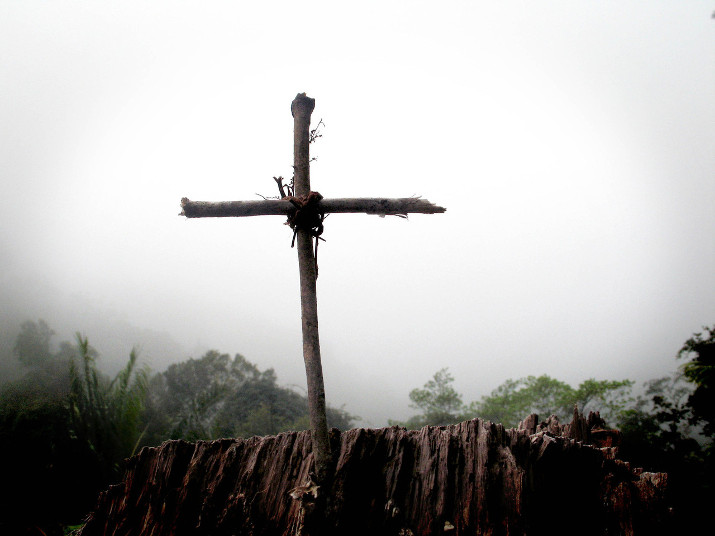
One forsaken grave

“So give me hope in the darkness
that I will see the light
'Cause oh, you gave me such a fright.
But I will hold as long as you like,
just promise me we'll be alright.”
 
Most people who read this blog know that I am a twin. My brother, Luke, and I were numbers four and five, separated from our older siblings by at least eight years. We are very close to this day, and even as kids I can remember only one or two instances where punches might have been thrown. I love the connection we have and I believe it is unique.

In 2010, Esther and I suffered our first miscarriage. I remember the heartache of not getting to meet our child. Then in 2011, while Esther was pregnant with Levi we had another scare. Our doctor called with some test results and thought a medicine might help. I raced to the pharmacy while praying furiously. Few people know that Levi had a twin sibling in the womb, and as it turned out we lost one child but one survived. I sometimes wonder about that – if he somehow knows there is a twin brother or sister waiting to meet him one day.


It was nearly midnight when my phone rang and woke me up from the couch where I sleep when I'm on call – to try and spare Esther and baby Gabriel more disturbances in the night. A visiting family medicine resident named Christie from the US needed me to see a patient in the hospital. When I arrived, I saw Delma gasping for breath, barely conscious.

I recently cared for Delma and her twin sister Elma on the ward for severe breathing trouble. I remember the confusion each morning as these 8-month old twins often got switched around in the bed and it took a few moments for their mother to sort out who was who. But they improved and went home. The respite wouldn't last, though, and both fell ill with breathing complications again.

As soon as I arrived I knew Delma was in trouble. The nurses couldn't get intravenous access to give fluids or drugs and a nebulizer aggressively pumped “gas-maracin” into her face, trying to open her constricted airways. Delma was slowly suffocating. It brought back harrowing memories of Levi's illness a couple years ago.

I got adrenaline from our drug cabinet and injected it into Delma's skin, then placed a special needle directly into the bone of her leg and gave a powerful respiratory medication through the intra-osseous line. She seemed to relax some, but I knew she needed to climb a big hill to recover. Christie and I grabbed the hands of her mother and prayed for her. All the while, her sister Elma watched on, mostly oblivious to Delma's obvious distress.

The next day our staff gave every possible treatment to Delma. Sadly, her breathing wore out and she succumbed to the constriction in her lungs. Elma watched passively as their mother cried over her lost twin sister.

Recently in our nursery, we lost two babies to prematurity. Each had a twin that survives them and are doing well. Those babies are a blessing to their grieving mothers. I love the strength of these women who can love on their living children, but know that a tinge of sadness lingers as they consider the departed siblings – ghosts that we all knew.


I worry that I don't have the right words for the families here when they lose children under our care.  

As a medical missionary, I feel those moments are precisely why I wanted to come to a place like Kudjip.  I believe doctors have a special connection to their patients - encountering their moments of greatest vulnerability and triumph.  As a follower of Christ, I see the opportunity to present the love of God in those circumstances.  So why am I so paralyzed?

Perhaps I struggle to find something to say because, in those moments, I am simply trusting in the persevering hope we share in Christ.  Hope in the darkness.

For every child we lose to malnutrition, pneumonia, diarrhea, pre-maturity or one of the other myriad illnesses we might see here, we probably send five home to their families - to life.  As they gather their belongings from the bed preparing to leave for the village, I take a moment and appreciate that they have been restored.  That a grave meant for them remains empty.  I want that same paralysis to grip me - grateful that their recovery, like those we lose, represents something truly beyond me.

"Our wayside planet, carrying land and wave,
Love and life multiplied, and pain and bliss,
Bears, as chief treasure, one forsaken grave."
-Alice Meynell

Tuesday, May 23, 2017

Beyond reach

"Today, we live in a media-saturated, Internet-connected, cell phone-equipped world in which everything that happens anywhere is instantly available everywhere ... We now have the opportunity not only to see those in extreme poverty but also to help them."  -Richard Stearns

For many of the people who read this blog, it might be difficult to imagine what things are like on the ground.  What is the hospital like?  What are the conditions like?  What challenges do the people face?  Perhaps the stories and pictures from this blog have painted a virtual picture for you.  But the amount of stories, information, and pictures coming into the typical western home every day are staggering - often stories about hard-hit places in the world where help is desperately needed.  Nothing can quite compare to experiencing PNG on the ground

From the enjoyable fireside at my home in Tulsa, Oklahoma, Papua New Guinea felt like a million miles away.  I remember spending a month here as a resident, and then running through the rest of my training wondering if I were called to come back.  Back to 'those' stony roads, 'those' hospital wards, 'those' sick and hurting in the middle of the Pacific.

Not quite a million ...

One thing I love about being here is how supportive our families are toward the mission we feel like God has given us to reach out to the suffering patients of Jiwaka.  We are so grateful that they are willing to spend years at a time away from us and grandchildren, nieces, nephews and cousins.  Many of them actively support our work - through their thoughts, prayers and gifts.

A few months ago, my brother Luke and nephew Anson were able to get bruised and bloodied on the ground in PNG.  While they mostly came to see the kids, spend time with us and help with some chores around the home, they got to see first-hand what the country is like and how we fit in here.  Before they came, I arranged a day to get them into the true village and bush experience of PNG that so many of our patients encounter every day.  In particular, I wanted to look into a specific valley - where my twin brother Luke and I each have a namesake child running around the jungle because of our efforts at Kudjip to treat their mother.  During their visit, we summited Mount Kulpope, which lies on the range north of our station, looking down into one of the most remote places of the world - the Jimi valley.


Anson, Luke & I on Mt. Kulpop

Intro

We are not the “world travelers” of the family. Before this trip, Anson had been to Canada exactly once. And Luke sometimes gets home-sick on his way to the office. We’re both used to our comfortable American lifestyles.
Even reading this blog is a jolt - Papua New Guinea seems unreal. It's much easier to read whatever stories & pictures our Facebook feeds and reddit put in front of us.
So we're very thankful to Papa & Mimi for encouraging us, and supporting our trip. We had a chance to spend time together, and to experience PNG for real. (After a quick day full of banter in Sydney)

Arrival

First, we filled 20 hours of travel and a day in Sydney, Australia with some Crouch banter. Then we flew from Sydney into Port Moresby. The airport is modern, but small. We made a short walk outside from international to domestic terminals. A local "pikinini" pinched Anson's (white) leg. A lady in the airport asked Luke if he was a doctor at Kudjip.

We landed in Mt. Hagen's new terminal, complete with a real baggage carousel. Mark, Esther, and all the kids came to pick us up! And we got one of the first “real” PNG experiences that doesn't appear much on this blog - the "roads" of PNG.

The US Army Corps of Engineers developed the "Pavement Condition Index." It's a number between 0 (worst) and 100 (best) that indicates general condition of pavement. It includes distress types from "alligator cracking" to "bleeding." I assume the PNG Army Corp of Engineers’ scale goes from 0 to negative 100 and includes “bus-sized sink-holes”.

But, we did arrive at the Nazarene Hospital station.

I noticed immediately how much the station felt like a monastery. I’ve visited the Abbey of Clear Creek in Oklahoma dozens of times. There’s something about places of enduring intentional community. They are quiet, and there are few frills; opposite to most modern Western environments.

Week


We started with a hospital & station tour. This blog doesn’t describe the amazing gardens - especially fruit - at Kudjip. Almost every house on the station has a large garden (by American standards). And every plant in every garden is always bearing fruit. We also saw some of the station operations. We met Jordan who builds and repairs many of the facilities.


That night, we played the board games that we brought for the family. Levi beat us all with "the dream" draw in Carcassonne.

The next day, we “helped” paint Lucy’s new school desk, and Anson got to teach the elementary kids in Anna’s PE class (soccer, of course). We joined Mark for a “swim” in the "station canal". Where "swim" means "harrowing death-race against the current." And where "station canal" means "10-meter fork of water between death-by-waterfall or death-by-grinding-in-the-hydro-power-generator."

Anson strikes the post in the kids' PE class

"Warning!  All adults must look after kids in this area!"


Since that was so much fun, we also visited the Kudjip dam. At least there were signs warning of death. And yet we saw many PNG pikininis doing back-flips into the reservoir inches away from a 12-foot fall. We played a game of volleyball with many station docs, and finished the day with dinner with the McCoys.

The next day, we joined Brandon Zimmerman - a professor from the Good Shepherd Seminary - for a hike up Mount Kulpop to try to get a view into the Jimi Valley, which you may have read about on this blog before. Brandon arranged for a guide, but by the time we reached the foot of the mountain, we had at least 4 guides. We wore hiking boots and high-tops; a few of our guides were bare-footed. Brandon suggested we were 4 of only 50 white people to ever hike up the mountain. It was the hardest thing either of us has ever done. But we saw some kid's homework on the trail - now THAT'S a hard walk to school! (Luke: When someone complains about box-jumps at CrossFit, I now say "Somewhere in Papua New Guinea there's an 8-year girl doing 100 box-jumps on her way to school.)


That night, Mark & Esther hosted a board game night for many of the station docs & staff. We got to share a couple of our games with them, and they showed us "Colt Express" - which we now play back at home.


Our last day was slow and quiet. So of course we invented a new dumb game called "honor" - a completely despicable variant of soccer to make your opponent run as far as possible as fast as possible. We packed our bags and watched The Lion, the Witch, and the Wardrobe to finish the night.


We left the station in the morning for the Mt. Hagen airport and our return flight to Sydney. We ate breakfast at a restaurant near the airport, said our last good-byes, and were back in cozy hotel beds by sun-down.

Reflections


I can’t get over how much the Kudjip station feels like a monastery. The trip was absolutely a spiritual retreat for me …

Years ago, I struggled with an episode of depression with a strong spiritual dryness - a crisis of faith and a dark night of the soul. Since then, I keep my faith and spirituality deeply to myself. (Maybe I’m afraid of triggering a relapse?) While becoming Catholic, I studied theology intensely. After my depression, I resolved to study the faith less and “to live real life with real people” more.

At my Easter Vigil Confirmation, my pastor - Fr. Joe - spoke about the Resurrection, and the many ways we experience the risen Jesus. But that “the best evidence of the resurrection is you: you are the Body of Jesus alive in, to, and for the world.”

I have never experience the truth of that statement more deeply than this trip to Kudjip. The real people at Kudjip saving real lives.

Even having been there, now that I’m back in my American home and routine, Kudjip and Papua New Guinea are already starting to feel exotic and remote again. (It doesn’t help that it took us 5 months to write this down!) It makes me sad that our culture seems to make real meaningful and spiritual life experiences so hard, and after we have them, it crowds them out with noise.

But I have no doubt that Papua New Guinea will be with me the rest of my life. I’m so thankful for everyone who made our trip possible. And when I do get some quiet moments, remembering the people of Kudjip is my new favorite way to remember how real Jesus is in the world.

Monday, March 20, 2017

Long Martyrs

 "Find me in the river
Find me on my knees
I've walked against the water
Now I'm waiting, if you please."

Often times I find it difficult to discuss serious illness with Papua New Guineans. I think the language is partly to blame. Pijin is not a sophisticated language, and rarely the mother-tongue of my patients. Describing a terminal illness or a permanent disability is challenging. I also think the cultural understanding of illness differs from the “Western” understanding. Illnesses are usually thought to be the result of the attacks of others or a spiritual imbalance, rather than misfortune or the result of a fallen world.
So when a patient comes to the clinic and I find that they have cancer, I know they will need a thorough explanation and a chance to ask questions, and I try my best to make enough space for that to happen, remembering the hundreds of patients still needing to be cared for that day.


Douni and her daughter Esther walked to my exam room in the morning, one of the first patients I would see that day. Douni looked to be almost sixty, slightly bent over with the long labors of her difficult life evidenced in her joints. Her daughter, Esther, lived in the nearby town of Mt. Hagen but brought her mother from the village to Kudjip because she had been having pains in her abdomen and losing weight.

Douni's skin and eyes glowed with an unnatural yellow appearance. Her abdomen held a soft mass in the right side near the ribs – a collection of findings known as Courvoisier's sign, which I've written about before.

An ultrasound confirmed my fears – Douni had cancer that couldn't be treated and she would die in the next few months.

I let Douni sit down on my exam table and put her clinic book down on the counter. I told her that she had a bad illness (“sick nogut”) called cancer. We had no medicine or surgery that could cure her. She did not get it from someone else and she would not give it to her daughter or her family. I advised her against using all of her money on bush-doctors or tribesmen selling herbs in the village. I could give her medicines to help her pain, and her daughter or family members could get new supplies of those periodically if she was feeling too weak to make the journey back tot he hospital. But nothing we gave her would cure her illness.

I give this explanation about once or twice a day to patients with various cancers – liver, pancreatic, ovarian or breast. Many times the patient and their relatives immediately start asking questions. “But can I eat something that will heal me? But can I go to Australia to cure this? How did this happen to me? A long time ago my brother fought me with a coffee stick and hit me there, is that why the cancer came up?” It makes my long-winded explanation feel like an exercise in futility.

But Douni and her daughter sat quietly through my talking with them, with their faces slowly dropping as genuine realization sunk in.

Then this beautiful Papua New Guinean mother (“lapun mama”) brought her hands up until she was holding my face in them. She said, “I thank God, because he sent you to help me and my people. Now the rest of my life is in His hands.”

We prayed together – Douni and Esther were not the only ones crying through that prayer.


Esther thanked me as she helped her mother off the exam table. I showed them to our dispensary to collect promethazine for nausea and paracetamol for pain - releasing Douni to her long martyrdom with cancer.

In the book of John a friend of Jesus, Lazarus, fell ill and it appeared he would die, so his sisters summoned Jesus – who advised his disciples that the illness would not kill him, but show God's power. But by the time they got to there, Lazarus had died and his body was already entombed. There are likely many commentaries about what happened next, but one of the most striking verses in the Bible follows.

Jesus wept.

Until moving to Papua New Guinea, I'm not sure I realized why this verse was impressive. I used to believe that this verse showed Jesus was entirely human, despite being entirely God. He had feelings and emotions - he struggled with sadness - he had close friends whom he could mourn. But reading through the rest of the Gospels, the humanity of Christ is already revealed impressively. His compassion on crowds, for example. There was more in this weeping than just being human.

Jesus knew that Lazarus lying in a tomb, wasted away by an illness, was a violation of God's plan. That the illness and suffering of the world were a tragedy. As he looked at the stone in front of the tomb I believe he saw the millions of graves around the world filled with mothers, children, grandparents and young men like Lazarus. He saw beyond Lazarus' resurrection to the need for a resurrected world, completely free of sickness and death. And perhaps, to this end, he saw his own tomb and knew what trials were in store for him.

I've only ever seen one person who I believe might have been resurrected from the dead.

But I've seen hundreds others who walk the long and lonely martyrdom of cancer, HIV or Tuberculosis that I can't cure.

And in one of those moments, to which I sadly become less sensitive, Douni brought me back to the front of Lazarus's tomb. Where the savior I serve let his heart grieve and weep. That I might truly be conformed to the fellowship of his suffering.

And I felt a beautiful joy. Knowing that, for some, I may not heal their physical bodies. But that their beautiful spirits now rest with Christ in a world free of sickness or suffering.

"But if the blessing's in the valley
then in the river I will wait."

Friday, December 23, 2016

Solemn Rejoicing

“Emmanuel shall come to thee O Israel.”

Several weeks ago a young lady named Ludy came to our hospital. Ludy had been to see us once before with contractions early in her pregnancy. We treated her with steroids and a medicine to ease her contractions and sent her home. Within a few days, Ludy started having contractions again. She knew her baby was coming. On Thanksgiving day, she made the return journey along the stones and across the rivers of Papua New Guinea and arrived at the hospital just in time to deliver a premature baby.


She was small, but cried vigorously. She swaddled her up and settled in for the long night, wondering if she would survive.  Her daughter weighed only 1.03 kilograms (2 pounds, 4 ounces). We placed her in our warmer, started some intravenous fluids and medications to help her breathing and prevent infection.


Working in the newborn nursery at Kudjip brings me such mixed emotions. So often, babies who ought to live die under my care. Other times, babies thrive and their mothers receive their bundles of joy after some tender time in the hospital. I have learned to think of babies surviving in terms of their birth weights. Between 1kg and 2kg, I give them a percentage. A 1.5kg baby I would say has a 50% chance to live. I gave Ludy's baby a 3% chance (1.03 kg) to live.

“O come thou dayspring, come and cheer
Our spirits by thine advent here.
Disperse the gloomy clouds of night
and death's dark shadows put to flight”

Esther and I recently disagreed about this ancient hymn, now a common Christmas carol.  She felt the song was in conflict - urging us to rejoice but always written and performed in a somber, minor key. 

While true, I noticed that the words speak about a messiah who is yet to come. Israel, indeed the world, groaned without Him.  Families were divided by occupying kingdoms, refugees filled the middle east, people were oppressed by rulers, mothers and babies died in childbirth.  The carol represents a command, not a feeling.  Rejoice not because the savior is here, but because we have the guarantee of his coming.  Rejoice in the midst of the unknown.   Rejoice solemnly, but with hope.

Every morning, the first patient I see is Ludy's little girl.  For a week or so, she lost weight and couldn't feed.  Then, miraculously, she began breathing well.  She took small amounts of mother's milk offered through a feeding tube.  Her color improved.  She gained some weight.  Each morning, I rejoiced a little more when I saw Ludy caring for her tiny baby in our nursery.

This morning, Ludy's daughter weighs 1.38kg. Every day she is beating the odds. Every day she is bringing a little more light into that nursery room. Every day she is putting death's dark shadow slowly to flight. Ludy and I enjoy her, and our solemn rejoicing holds more and more hope.


I don't know what will happen next.  But I am grateful that a savior came to absorb the burdens of His broken world.  And I choose, in the midst of these challenges, to rejoice in anticipation of a time when tears will be gone, pain will disappear and death will be a distant memory.

Merry Christmas to you and your families as we celebrate our Savior's birth.

Tuesday, November 1, 2016

Silent Hearts


You liberate me from my own noise and my own chaos

“Dr. Mark – the patient is going into arrest”

Nearly every day I hear these words from one of our nurses. When I do, I generally drop what I am doing and accompany the nurse back to the hospital ward, harboring all kinds of doubts about what will come next.

Usually, a patient lies on their bed, with nursing students around them trying to give them artificial breaths and chest compressions while family members look on in fear. As I arrive, a small opening appears and I go to the bedside. Sometimes I tell the nurses to give medications, sometimes I take a turn giving compressions, sometimes I put in a breathing tube.

Then during a pause in our efforts, I kneel at the bedside and place a stethoscope – that quasi-mystical symbol of the medical profession – on that patient's chest. In this moment the nursing students are quiet, the staff stop speaking and the family members hold their breath with their eyes all fixed on me.


And I hear nothing. No heartbeat. No familiar sounds of life.

I look at the patient's mother, father, son or whoever is standing watch over them and I say, “Em i dai pinis” - “They are dead.”

And the wails of the family erupt. Sometimes they throw themselves onto their deceased loved one or onto the ground, howling for them to return. I lower my head, say thank you to the staff and attend to my other patients while the students return our resuscitation equipment to its place and the family grieves.


Lately I have struggled with the number of patients who die here. Every day I left the ward thinking, “What can I really do, in the end?” Medically, I had nothing else to give and each day people kept losing their fights and dying. I grew tired of putting my stethoscope on silent hearts.

But one morning, as I sat looking over my garden and the mountains of PNG in the distance, I realized something.

Every moment that went quiet, while I listened for signs of life in a dying patient, meant an opportunity to listen for something more. Those moments take on an intimate sacredness. I can use those times to close my eyes and let Christ fill up the silence.

It is there that I will know you and you will know me


One afternoon, our midwife Sylvia came to let me know about a patient who recently arrived from a rural health center named Stella. Stella was expecting her first baby in a couple weeks. She couldn't have been more than eighteen. She felt contractions for a couple days and went to her nearest facility, but despite hours of pushing couldn't deliver her baby. They sent her to Kudjip.

The nurses evaluated Stella and came to get me. “Doc, I can't find a fetal heart tone”

As I wheeled the ultrasound machine next to Stella, she gave me a soft smile, despite her pain. With her contractions a baby's scalp was visible, but had an unnatural color. I placed the ultrasound probe on her abdomen, looked for a minute and then told Stella the news – her baby had died.

Her cries filled the room - the entire ward. And I wanted to run away.

But I stayed with Stella, her mother and our nurse Theresia. Stella pushed. I pulled with a vacuum. Theresia coached and supported her. We delivered Stella's deceased child after a very difficult process requiring some extensive suturing. I dripped with sweat and removed my surgical head-light to complete some paperwork.

The baby lay silent next to the bed and Stella slept under some anesthetic.

And I paused. The nurses had left. Stella was quiet. Her mother had gone out. There were no cries. I stood by her bedside listening. And I felt like I knew God's heart – as He felt the loss and grief that filled that room. Yet with a mingled affection for Stella who had survived this ordeal, would wake up and recover, and who could one day find restoration and hope again.


A few days later I sat on Stella's bed with her and her mother. I explained to her that I felt she would have children again, that they would likely be healthy, that she hadn't done anything wrong to make this baby die and that I wanted her to come straight to the hospital the next time she was in labor. These bereaved ladies smiled while holding my hands in theirs. And in a quiet moment I could only think, “sorry” and went on to my next patient.


Someone needs to be able to think medically when the noise and chaos drowns out everything else. Someone needs to direct the nurses in what medications to give. Someone needs to determine if we continue our efforts. And finally, someone needs to pronounce that patient – dead or alive. I have to be in that moment.

But Christ chooses to be there.

He chose it two thousand years ago, and keeps choosing it today. In the places of the world where babies die before they see a sunrise, where families are divided by conflict, and where children watch their mothers succumb to AIDS.

He enters to speak in that moment when someone's heart goes silent.


Tuesday, September 6, 2016

A man to fish

'Jesus said to Simon, "Don't be afraid; from now on you will catch men."'
-Luke 5:10


Just as I assumed my call responsibilities a woman named Elis came to the obstetric ward in the late afternoon. She was from a remote part of our province and had been brought to Kudjip along with her “wasmeri” (or guardian) after several days of difficult labor in deep jungle. Her water broke some days before she came, but because of the difficult road, she and her family could not get a car to bring her to the hospital.

When I examined her, it became obvious that her baby had died some time ago and that her body was in shock from an aggressive infection. The smell was unbelievable.

During the long hours of that evening, she endured perhaps the most devastating delivery I have ever seen and nearly bled to death. While I tried to stop the bleeding, nurses around me poured intravenous fluid and oxytocin into the large veins in both of her arms. She received blood transfusions overnight and just about every medicine I could think of to fight the infection. I honestly didn't believe she would see the dawn.

About five in the morning, another lady was sent to Kudjip for a prolonged labor. Vero had been laboring without much progress at a small health center and the nursing officer there appropriately sent her to be taken care of at Kudjip. When I arrived, her baby's heartbeat sounded strong but she was struggling to deliver. After some coached efforts and a little medicine to improve her contractions, she safely delivered a vigorous healthy baby girl.

I checked on Elis, and discovered that despite blood and antibiotics, she was still in shock with a dangerously low blood pressure. I was afraid to clean out her uterus, called a curettage, because her infected womb could rupture if I did so and she would likely be killed in the process. Dr. Erin arrived and assumed her care, packing the uterus and giving yet more medicines and blood to keep her alive.

For Vero, her difficult labor was recognized and she was appropriately and safely referred and delivered at our hospital. For Elis, through not fault of her own, the prolonged labor resulted in the death of her baby, and may yet still claim her life as well.

Such is the nature of childbirth in many of the remote parts of the world.


Some years ago, Kudjip hospital partnered with Samaritan's Purse and New Tribes to conduct maternal health education in Hewa, a remote mountainous jungle region accessible only through planes and helicopters. Susan Kopf, a New Tribes missionary and nurse, had been feeling the burden of the mothers and babies dying there for years. After the visit, one of the village women, Jennifer, became skilled at deliveries and has since delivered over twenty babies in this remote jungle village. (See the full story here)


Last week Jennifer, Susan and three other Hewa ladies came to Kudjip to learn more about safely delivering babies. For most of them, it was the first time they had seen a permanent building. I had the wonderful privilege of teaching them about obstructed labors and then showing them a normal delivery in our maternity ward. These ladies will go back to their village and apply what they have learned in an effort to stem the growing numbers of young lives claimed in childbirth there.


“Give a man to fish, and you feed him for a day. Teach a man to fish and you feed him for a lifetime”

I have always had a burden for teaching. I loved this opportunity to share some of the knowledge and skills I use everyday for the ladies who come to Kudjip to have their babies. But I'm even more excited that what I've done will go into the jungles through these village birth attendants and, perhaps, bring God's healing there and lead the lives of the Hewa people to the one who can teach them to fish for men.

-----------------
 
UPDATE:  Susan posted the following on Facebook shortly after these brave young women returned to their village.


Friday, August 12, 2016

Rise Again

"You take what is, and You make it beautiful ..."
-Lauren Daigle


I  arrived at the hospital Thursday morning and started seeing the babies in my nursery. Most Papua New Guinean mothers don't name their children until they are a few months old, because so many of them die that they want to be certain the child will live before naming them. So baby-of Susan lay in her incubator, but I could tell she wouldn't last through the day. Born only 720 grams, she may have had a chance to survive in a country with Neonatologists, NICUs and fancy gadgets and toys. In a district mission hospital in PNG, I knew what would be coming for a few days. But each day, the baby lived and sister Sylvia and I prayed that we might, beyond hope, see a miracle.

Shortly after, the nurses got me for one of our patients who had been to the restroom and returned bleeding heavily. Pong had come to the hospital the previous day bleeding from a placenta previa. My history with this condition is terrible. Her bleeding slowed, though, and I had given her steroids to try and help her premature baby survive. After my previous experiences, I thought we could delay her operation and give her baby every chance to come out strong and healthy. But now Pong was bleeding again and I quickly performed an ultrasound. I could barely discern the flicker of a pulse in the baby's heart. I knew we would be too late. The operating team quickly took Pong to surgery, and while she survived, her baby died.

As I went back to the maternity ward, I noticed a nurse swaddling Susan's baby into wraps, preparing to send the infant home with her mother for burial.

I finished maternity rounds, too drained to collect all the staff together from their myriad tasks to say our usual morning prayers.
I went to the outpatient department deflated.

And on my desk was paperwork. Actually, seven pieces of paperwork. Death certificates from the past 10 days of patients that I had taken care of in the hospital. Patients who lost their fights.
B/o Joyce, 1 day, Infant, Birth Asphyxia.
B/o Meti, 16 days, Infant, Prematurity.
L.K., 40 years, Housewife, HIV.
M.M., 30 years, Farmer, TB/HIV.
J.P., 2 years, Child, Malnutrition.
A.A., 4 years, Child, Typhoid.
N.M., 5 years, Child, Malnutrition.


“I thank Thee that this Christian way whereon I walk is no untried or uncharted road, but a road beaten hard by the footsteps of saints, apostles, prophets, and martyrs.”
-John Baillie
 
A couple hours later, Grace came to my door. Grace and I first met two years ago, when she came to our maternity ward bleeding heavily in the eighth month of her pregnancy from placenta previa. She delivered her baby who lived in our nursery for a few days, but eventually died from prematurity.

Today, Grace was seeing me for a follow-up visit, now expecting her second child. Her blood pressure had been running high and I was monitoring her for the development of pre-eclampsia. Today, her blood pressure measured 160/90 and her lab tests showed that she had developed pre-eclampsia. She was still premature.

I had to find Bill, my mentor, a couple times that day because I could tell my frame of mind wasn't the best to make some of these decisions. It became obvious that we needed to deliver Grace prematurely (again) by C-section (again) and pray that her baby would be strong and healthy. So I admitted Grace to the hospital, planning to do her surgery the next day.

In the morning, Grace and her husband Simeon were in the delivery room. I confirmed her diagnosis with lab tests and confirmed the baby's presentation with an ultrasound. Bill came to talk about our plan with Grace and Simeon and we prayed together that this baby would live. A few hours later, I recruited one of our surgeons, Dr. Ben, to help with Grace's operation.


During surgery, Grace's blood pressure reached 210/120, but she had already received doses of medicines to protect her from seizures and she did well.
Her baby delivered crying and screaming, a small but vigorous boy.

I prayed that he would be able to feed and grow, and not succumb to being born early, like his older sister two years ago.

But the next morning I was terrified to walk into the hospital.  I remembered those seven stark reminders of patients who lost their earthly fights under my care.  I remembered the three babies we lost, including Grace's, a couple years ago from this same illness.  I thought about Pong, now recovering on the ward with no child because I didn't deliver her baby quickly enough.  I settled into my chair to read, trying to summon the courage to face the fate of this day.

"Though a righteous man falls seven times, he rises again."
Proverbs 24:16

I went to the hospital to see Grace's baby sleeping comfortably next to her.  He was small, but perfect in form.  As I finished rounds, Grace smiled broadly as she cradled him in her arms and nursed him.  Her husband Simeon found me later in the morning with tears crowding the corners of his eyes, took my hand in his and simply said, "Tankyu, Dokta Mark"


"With every morning light,
again we are redeemed."

-----------------------------------------
Update:

A few days ago an older woman found me in the emergency room.  She had a baby with her and a gift of a new bilum (bag) that she made for me.  It was Grace's mother holding her grandson that I got to be part of bringing into the world several months ago.

We hugged each other and she gave me the bilum and I shook hands with this miracle baby.  Like I said, many parents in Papua New Guinea do not name their babies for a few months, because so many of them die.  But at 6 months old I assumed this little one had been named so I asked the grandmother, "Ol givem wanem nem long em?"

She smiled a bit wider and said, "Mark"